Hamstring Injury — Physiotherapy, Recovery & Return to Sport
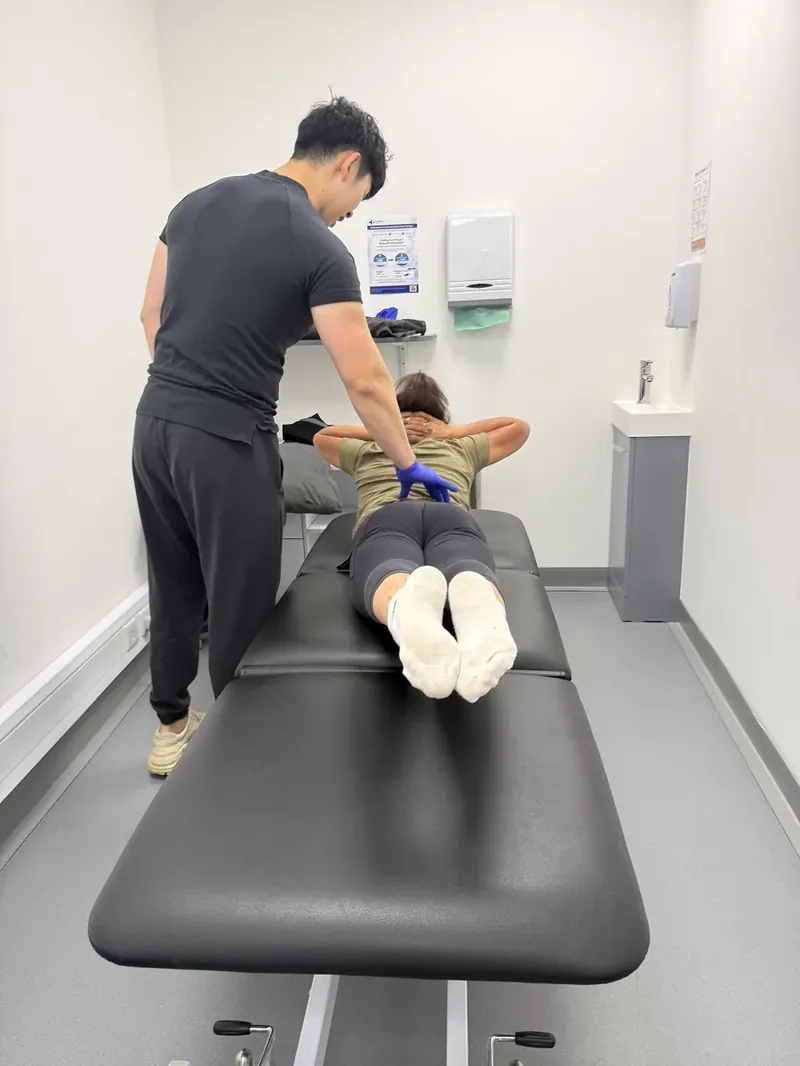
Hamstring injuries are among the most common muscle injuries in sport, with particularly high rates in football, athletics, rugby, and court sports. They range from minor muscle strains that resolve within days to significant tears requiring weeks of rehabilitation before return to sport. They can also take the form of proximal hamstring tendinopathy — a more chronic condition affecting the tendon at the hip.
Hamstring Strain — Acute Muscle Injury
An acute hamstring strain occurs when the hamstring muscles are overloaded — typically during high-speed running or explosive acceleration — causing fibres within the muscle to tear. The injury usually produces a sudden sharp pain in the back of the thigh, and may be accompanied by a "popping" sensation at the moment of injury. Bruising and swelling can develop over the following 24 to 48 hours.
Grading Hamstring Strains
- Grade 1 — minor fibre disruption, walking possible, 1–2 weeks recovery
- Grade 2 — partial tear, significant pain and limitation, 4–8 weeks recovery
- Grade 3 — complete rupture, severe pain and immediate functional loss, requires urgent assessment
Physiotherapy for Hamstring Strains
Optimal management of hamstring strains involves early physiotherapy rather than simply resting until pain settles. A structured rehabilitation programme includes early gentle range-of-motion exercises, progressive loading beginning with isometric exercises and advancing to eccentric and then sport-specific loading, and a criteria-based return-to-running and return-to-sport progression.
The Nordic hamstring exercise — a specific eccentric exercise for the hamstrings — has strong evidence for both rehabilitation of hamstring strains and prevention of re-injury. It is a key component of our hamstring rehabilitation protocols.
Proximal Hamstring Tendinopathy
Different from an acute muscle strain, proximal hamstring tendinopathy involves changes in the hamstring tendon at its attachment to the ischial tuberosity (sit bone). It causes deep buttock pain with sitting, running, and hip flexion under load — and can be a stubborn, long-lasting condition if not managed correctly.
For cases not responding to physiotherapy, shockwave therapy may be considered. See our dedicated guide to shockwave therapy for hamstring tendinopathy.
Risk Factors and Prevention
Key risk factors for hamstring strain include previous hamstring injury (by far the strongest predictor of re-injury), inadequate rehabilitation of a previous strain, training load spikes, and hamstring strength deficits relative to the quadriceps. A hamstring strengthening programme — particularly eccentric work — is the single most effective intervention for reducing hamstring injury risk.
Available 6 days a week including Saturdays. Lambert Sports Clinic · 380 Ewell Road, Surbiton KT6 7BE · CQC registered · HCPC physiotherapists
Return to Sport After Hamstring Injury
Return to full training and competition after hamstring strain requires a structured, criteria-based progression. Key criteria include full pain-free range of motion, limb symmetry in strength testing, and completion of progressive running speeds without pain. Your physiotherapist will guide this process with clear goals at each stage.
Book a Hamstring Injury Assessment in Surbiton
HCPC physiotherapists · 6 days a week · Surbiton, Kingston & New Malden
Book Your AssessmentDisclaimer: This article is for general information only and does not constitute medical advice. Suitability for any treatment is determined at individual clinical assessment. Outcomes vary. Lambert Sports Clinic is CQC registered; all physiotherapists are HCPC registered.