Shockwave Therapy for Proximal Hamstring Tendinopathy
Proximal hamstring tendinopathy is a condition that produces deep, localised pain at the sit bone (ischial tuberosity) where the hamstring tendons attach to the pelvis. It is characterised by pain when sitting on hard surfaces, during and after running, when walking uphill, and with lunging or hip flexion under load. It can be a particularly stubborn condition that does not respond quickly to treatment and has a tendency to recur if not properly managed.
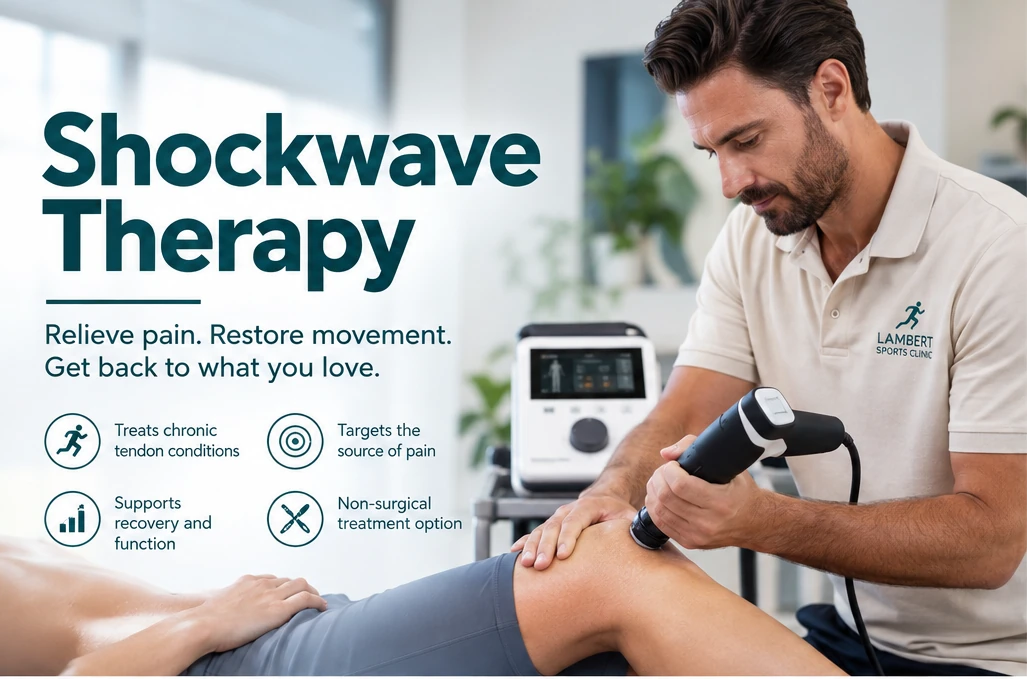
Shockwave therapy (ESWT) is increasingly used for proximal hamstring tendinopathy, particularly in cases that have not responded adequately to progressive loading rehabilitation.
What Is Proximal Hamstring Tendinopathy?
The three hamstring muscles (biceps femoris, semitendinosus, and semimembranosus) attach proximally — at the top — to the ischial tuberosity, sometimes called the sit bone. Repetitive loading of the hamstring — particularly during activities that require the hip to flex while the hamstring is under load, such as running, cycling, and certain gym exercises — can produce degenerative changes in the tendon tissue at this attachment point.
Compression of the tendon is also an important factor. Activities that place the hip in deep flexion — sitting, forward bending, and hill running — can compress the tendon against the bone, aggravating the condition. Understanding and managing this compressive load is central to treatment.
Common Symptoms
- Deep pain in the buttock, at or near the sit bone
- Pain when sitting, particularly on hard surfaces
- Pain with running — often worse going uphill or at speed
- Stiffness and aching after rest following activity
- Pain with hip flexion under load (deadlifts, lunges)
Who Does It Affect?
Proximal hamstring tendinopathy is common in runners (particularly those increasing mileage), cyclists, footballers, and athletes in field sports. It is also seen in recreational exercisers who have introduced new loading patterns, such as deadlifts or intense cycling.
Conservative Treatment
The management of proximal hamstring tendinopathy requires careful attention to compressive load management — avoiding deep hip flexion positions in the early stages — combined with a progressive hamstring loading programme. Heavy slow resistance exercises for the hamstrings, progressing through an appropriate range of motion, are the foundation of rehabilitation. This is a slow process — meaningful improvement typically takes months rather than weeks.
Shockwave for Hamstring Tendinopathy
For cases that have not responded adequately to a well-structured rehabilitation programme over 3 or more months, shockwave therapy may be considered. A small but growing body of clinical evidence supports shockwave for proximal hamstring tendinopathy, with studies showing improvements in pain and function.
Delivering shockwave at the proximal hamstring attachment requires careful probe positioning. The treatment is typically mildly to moderately uncomfortable at the sit bone due to the sensitivity of the area. 3 to 6 weekly sessions are usually recommended alongside ongoing rehabilitation.
Important differential: Deep buttock pain can have several causes including sciatic nerve irritation, hip joint pathology, and piriformis syndrome. A thorough physiotherapy assessment is essential before commencing shockwave to confirm the diagnosis.
Assessment at Lambert Sports Clinic
At our Surbiton clinic, assessment for proximal hamstring tendinopathy includes history, physical examination, and assessment of contributing factors including running biomechanics, hip strength, and training load. A clear treatment plan — including the role of shockwave within the wider rehabilitation programme — is agreed before treatment begins.
Book Shockwave Therapy for Hamstring Tendinopathy
Assessment + first session from £90 · HCPC physiotherapists · Surbiton, Kingston & New Malden
Book Shockwave — From £90Disclaimer: This article is for general information only and does not constitute medical advice. Suitability for any treatment is determined at individual clinical assessment. Outcomes vary between patients. Lambert Sports Clinic is CQC registered and all physiotherapists are HCPC registered.