Shockwave Therapy in Surbiton
Physiotherapy-led treatment. Evidence-informed care.
Targeted shockwave treatment for selected tendon and musculoskeletal conditions, delivered as part of professional physiotherapy care at Lambert Sports Clinic.
No GP referral required · Secure online booking · Same-week appointments
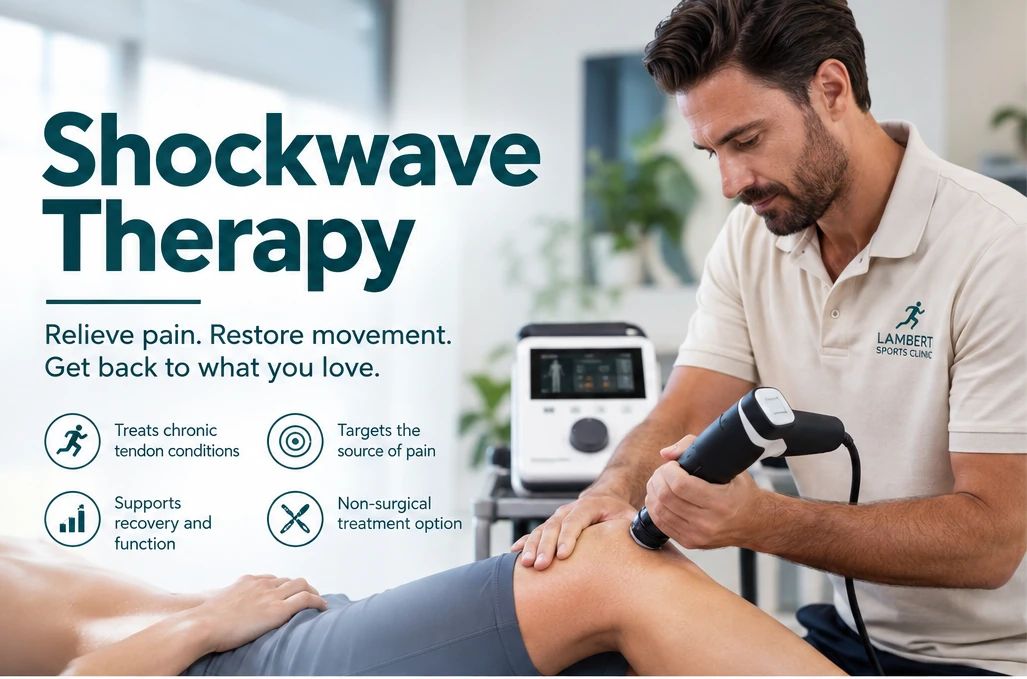
What Is Shockwave Therapy?
A non-surgical treatment for selected tendon and musculoskeletal conditions.
Shockwave therapy uses acoustic pressure waves — pulses of mechanical energy — directed at specific areas of the body. In physiotherapy, it is used as part of the assessment and management of selected persistent tendon conditions and some other musculoskeletal presentations.
The treatment is delivered by a qualified physiotherapist, following a thorough clinical assessment to determine whether it is appropriate for your particular condition and medical history.
Shockwave therapy is not a standalone cure, and it is not appropriate for every patient or every condition. When clinically suitable, however, it may be considered as part of a wider treatment programme that typically includes rehabilitation exercises and progressive loading — recognised as the cornerstone of tendon recovery.
⚕️ Clinically delivered: All shockwave therapy at Lambert Sports Clinic is provided within a physiotherapy consultation and follows a thorough individual assessment.
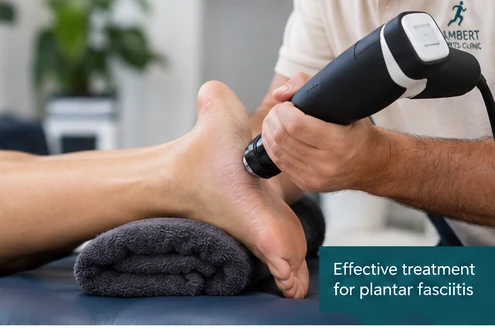
Potential Benefits of Shockwave Therapy
Outcomes vary between patients. The following reflects what treatment may offer for appropriately selected individuals.
Pain Management
Shockwave therapy may help reduce pain in selected persistent tendon conditions. Not every patient responds in the same way.
Improved Mobility
Treatment may support improvements in movement and daily function for some patients as part of an appropriate rehabilitation programme.
Non-Surgical Option
Shockwave may be considered as part of conservative management before exploring surgical options, where clinically appropriate.
Targeted Treatment
Treatment can be directed towards a specific area identified through clinical assessment, rather than providing a generalised response.
Rehabilitation Support
When combined with physiotherapy exercises and progressive loading, shockwave may complement a structured rehabilitation approach.
Return to Activity
An appropriate programme including shockwave and exercise rehabilitation may help some patients work towards returning to sport and daily activities.
Conditions We Assess for Shockwave Therapy
Shockwave therapy may be considered for the following presentations. Suitability is always determined by clinical assessment.
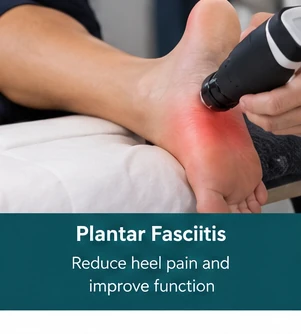
Plantar Fasciitis
Persistent plantar heel pain is one of the most common presentations assessed for shockwave therapy. Treatment is typically considered alongside foot strengthening and load management as part of rehabilitation.
Read more › Book Assessment — £90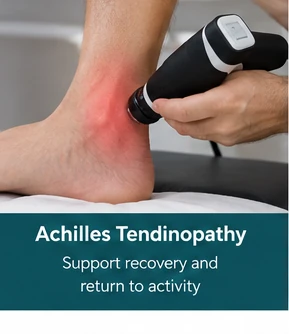
Achilles Tendinopathy
Both mid-portion and insertional Achilles tendinopathy may be considered for shockwave therapy alongside progressive loading programmes such as calf strengthening. Response rates and suitability vary.
Read more › Book Assessment — £90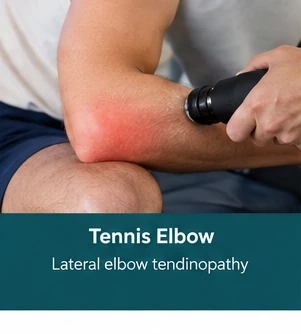
Tennis Elbow
Lateral elbow tendinopathy (tennis elbow) may be considered for shockwave as part of a physiotherapy programme. Evidence for its role in this condition varies, and clinical assessment will determine suitability.
Read more › Book Assessment — £90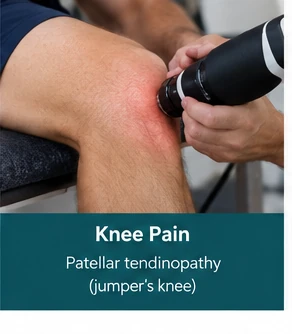
Patellar Tendinopathy
Patellar tendinopathy (jumper's knee) involves persistent pain at or below the kneecap. Shockwave may be considered for selected presentations where conservative management including exercise has not provided sufficient improvement.
Book Assessment — £90
Shoulder Tendinopathy
Shockwave may be considered for certain shoulder tendon conditions, particularly some presentations of calcific tendinopathy. It is not appropriate for every type of shoulder pain, and clinical assessment is essential to determine suitability.
Book Assessment — £90What Happens During Treatment?
A structured, physiotherapy-led approach from assessment through to follow-up.
Your physiotherapist takes a detailed history of your symptoms and relevant medical background. This includes understanding how long you have had the condition, what you have tried previously, and what your goals are.
A thorough physical examination helps identify the nature and location of your condition and determine whether shockwave therapy is clinically appropriate. Not every patient will be suitable for treatment.
If shockwave is considered appropriate, your physiotherapist will explain what the treatment involves, what to expect during and after each session, and how it fits into your overall rehabilitation plan.
Treatment is applied to the clinically assessed area. Some discomfort during treatment is possible, and temporary soreness afterwards is normal. Your clinician will discuss this before proceeding.
Shockwave therapy is most effective when combined with appropriate exercises. You will receive personalised guidance to support your recovery between sessions.
Progress is reviewed at follow-up appointments. Treatment is adjusted where necessary based on your response, and your rehabilitation programme is updated accordingly.
Does Shockwave Therapy Hurt?
Shockwave therapy can cause some discomfort during treatment. Most patients describe it as a pressing or tapping sensation that varies in intensity depending on the area being treated and their sensitivity at the time.
Temporary soreness, redness or mild swelling in the treated area in the 24–48 hours following a session is a recognised side effect. Your physiotherapist will discuss what to expect before treatment begins, and can adjust the intensity based on your comfort.
How Many Sessions Are Needed?
The number of sessions varies considerably between patients. Relevant factors include the specific condition being treated, how long you have had symptoms, your response to treatment, and the progress of your rehabilitation programme.
Your physiotherapist will discuss a realistic treatment plan based on your individual assessment. We do not guarantee a specific number of sessions or a particular outcome.
Safety and Suitability
Shockwave therapy is not appropriate for everyone. Your physiotherapist will review your medical history, medications and any relevant precautions before treatment. There are recognised contraindications that may prevent treatment.
Known contraindications include (but are not limited to) pregnancy, blood clotting disorders, treatment over active infections or malignancies, and certain implanted devices. Please inform us of any relevant medical history when booking.
All clinical content on this page is intended for general information only and should not replace individual professional advice. Clinical content should be reviewed by an appropriately qualified physiotherapist before publication.
Shockwave Therapy Prices
Transparent pricing. No hidden charges. Bupa patients welcome.
- ✔ Full physiotherapy assessment
- ✔ Shockwave where clinically appropriate
- ✔ Personalised treatment plan
- ✔ Exercise and rehabilitation advice
- ✔ No GP referral required
- ✔ Progress review
- ✔ Continued shockwave treatment
- ✔ Rehabilitation programme update
- ✔ Aftercare and exercise guidance
- ✔ 30-minute appointment
Shockwave therapy is provided when clinically appropriate, following physiotherapy assessment.
🏥 Bupa Patients Welcome
Shockwave therapy is available to eligible Bupa patients at Lambert Sports Clinic. We accept Bupa insurance for appropriately covered treatments.
Please check your individual policy, authorisation requirements and any applicable excess before booking. Coverage varies between policies and not all treatments may be covered in every case.
Book or EnquireFrequently Asked Questions
Common questions about shockwave therapy at Lambert Sports Clinic.
Shockwave therapy is a non-surgical treatment that uses acoustic pressure waves directed at specific areas of the body. It is used in physiotherapy as part of the management of selected persistent tendon and musculoskeletal conditions. At Lambert Sports Clinic, it is delivered within a physiotherapy consultation following a thorough clinical assessment.
Shockwave therapy is most commonly considered for persistent tendon conditions such as plantar fasciitis, Achilles tendinopathy, tennis elbow, patellar tendinopathy and certain shoulder tendon presentations. Suitability is always determined by clinical assessment — it is not appropriate for every patient or every condition.
Some patients experience discomfort during treatment. The sensation is often described as pressing, tapping or intermittent discomfort that varies in intensity. Temporary soreness, mild redness or swelling in the treated area in the 24–48 hours after treatment is a known side effect. Your physiotherapist will discuss this with you before proceeding and can adjust the intensity based on your comfort.
Plantar fasciitis is one of the conditions most commonly considered for shockwave therapy, and there is supporting clinical evidence for its use in persistent plantar heel pain. However, outcomes vary between patients, and treatment is typically considered alongside foot strengthening exercises and load management. A clinical assessment will determine whether it is appropriate for you.
Shockwave may be considered for both mid-portion and insertional Achilles tendinopathy, typically as part of a broader treatment programme that includes progressive calf loading exercises. Response varies between individuals and between the two subtypes of the condition. We will assess your presentation before recommending shockwave therapy.
Shockwave therapy may be considered for lateral elbow tendinopathy (tennis elbow) as part of a physiotherapy programme. The evidence for shockwave in tennis elbow is mixed, and it is typically considered for persistent cases where other conservative approaches have not provided sufficient improvement. Clinical assessment will determine whether it is appropriate for you.
The number of sessions varies between patients and depends on the condition being treated, how long you have had symptoms, your response to treatment, and your rehabilitation progress. We do not guarantee a specific number of sessions or a particular outcome. Your physiotherapist will discuss a realistic plan based on your individual assessment.
Some temporary soreness or redness in the treated area is common in the first 24–48 hours. You will receive personalised aftercare guidance, including advice on activity levels, exercise and when to expect any changes. Your physiotherapist will discuss what to expect at your appointment before treatment takes place.
Yes — shockwave therapy is delivered within the physiotherapy appointment price when clinically appropriate. The initial appointment (£90) includes a full physiotherapy assessment and shockwave treatment where it is indicated. There is no additional charge for shockwave if delivered during your session.
Shockwave therapy is available to eligible Bupa patients at Lambert Sports Clinic. Please check your individual policy, authorisation requirements and any applicable excess before booking. Coverage varies between policies.
No GP referral is required to book a shockwave therapy appointment at Lambert Sports Clinic. You can book directly online. If you hold private health insurance, you may need to contact your insurer for authorisation before your appointment — please check your policy requirements.
Your physiotherapist will advise you on appropriate activity levels after treatment. In general, high-impact activity immediately after treatment is not recommended. Light activity may be appropriate, but individual guidance will depend on your condition, the area treated, and your response to the session.
Therapeutic ultrasound uses high-frequency sound waves to produce a gentle heating effect in soft tissues and has been used in physiotherapy for many years. Shockwave therapy uses higher-energy acoustic pressure pulses at a different range and is associated with a different physiological response. The two are distinct treatment modalities with different indications and evidence profiles.
Shockwave therapy is not appropriate for everyone. Known contraindications include pregnancy, blood clotting disorders, treatment over active infections or malignancies, and certain implanted electronic devices, among others. Your physiotherapist will review your medical history and any relevant precautions at your assessment before making any treatment recommendation.
Learn More About Shockwave Therapy
In-depth articles on conditions and treatment.
Ready to Book Your Shockwave Therapy Assessment?
Lambert Sports Clinic, 380 Ewell Road, Surbiton, Surrey KT6 7BE
Or call us: 020 8133 5694