Is Shockwave Therapy Painful? What to Expect at Your First Session
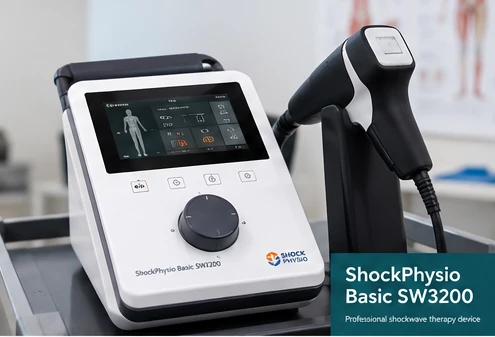
If you have been recommended shockwave therapy — or are considering it for a persistent tendon or musculoskeletal condition — the question of pain is usually the first thing on your mind. This is entirely understandable: shockwave therapy sounds intense, and the word "shockwave" does not exactly inspire relaxation.
The honest answer is: shockwave therapy is uncomfortable, but for the overwhelming majority of patients it is entirely manageable and well worth tolerating for the results it produces. This guide explains exactly what the sensation is like, how it varies between conditions, what happens immediately after, and what you can do to make the experience as tolerable as possible.
What Does Shockwave Therapy Feel Like?
The most common descriptions from our patients at Lambert Sports Clinic are:
- "Like a firm, repetitive clicking or tapping" — this is the most common description. The shockwave probe delivers rapid pulses of acoustic energy through the skin, and the sensation is a rhythmic, pulsing pressure.
- "Like a deep, aching pressure" — over very sensitive areas, the pulsing sensation is accompanied by a deep ache that is similar in character to deep tissue massage.
- "Like someone flicking the most tender part repeatedly" — over very reactive areas, particularly at the site of maximum tenderness in conditions like plantar fasciitis or calcific tendinopathy, the sensation can be sharper.
The intensity varies considerably depending on the energy level used, the condition being treated, and how acutely inflamed the target area is. Your physiotherapist will start at a lower energy level and increase gradually based on your response and feedback.
Pain Ratings by Condition — What Our Patients Report
Different conditions produce different pain experiences during shockwave. Here is an honest guide, based on patient feedback at Lambert Sports Clinic:
Calcific tendinopathy of the shoulder is typically the most uncomfortable shockwave treatment because calcific deposits are extremely tender, and the energy required to fragment them is often higher. Despite this, most patients complete the full course and report that the significant improvement in pain and function is worth it.
Is Shockwave Therapy Painful — Or Just Uncomfortable?
This is an important distinction. When patients ask "is shockwave therapy painful?", they usually mean "is this going to be unbearable?". The answer, for the vast majority of people treated at Lambert Sports Clinic, is no.
Shockwave therapy produces discomfort that is:
- Manageable — the intensity can be adjusted at any point during the session. If the sensation is too much, your physiotherapist will reduce the energy level immediately.
- Time-limited — the acoustic energy is delivered for 5 to 10 minutes per treatment area. You are not in sustained discomfort for the duration of the appointment.
- Progressively more tolerable — patients consistently report that sessions 2 and 3 are significantly more comfortable than the first session. As treatment takes effect and tissue sensitivity reduces, the sensation becomes easier to manage.
- Purposeful — the discomfort comes from the treatment targeting the most sensitive, pathological area. Patients who understand this often find it psychologically easier to tolerate than unexplained pain.
Patient perspective: "The first session was more uncomfortable than I expected — I'd rate it about 5 or 6 out of 10. But by session 3 it was more like a 3. And after 5 sessions my plantar fasciitis pain had reduced from an 8 to a 2. Worth every minute." — Patient review, Lambert Sports Clinic.
Before the Session — What to Know
Your first shockwave appointment at Lambert Sports Clinic is not simply an injection of energy into a tendon. It begins with a full physiotherapy assessment. Your physiotherapist will:
- Take a detailed history of your symptoms — when it started, what aggravates it, what has been tried before
- Assess the affected area, confirm the diagnosis, and check for contraindications
- Explain the procedure fully and answer any questions before beginning
- Establish a baseline for your pain level to track improvement across sessions
Preparation: There is no special preparation required. Wear comfortable clothing that gives easy access to the treatment area. Avoid applying lotions, oils, or creams to the skin over the treatment area on the day of your appointment. Ensure you are well hydrated.
What NOT to take before shockwave: Avoid anti-inflammatory medications (ibuprofen, naproxen, diclofenac) in the 48 hours before your session. The inflammatory response that shockwave therapy triggers in the treated tissue is part of the mechanism by which it stimulates healing — anti-inflammatory drugs suppress this response and reduce the treatment's effectiveness. Paracetamol is acceptable if you need pain relief.
During the Session — A Step-by-Step Guide
Positioning (2 minutes)
You will be positioned on a treatment couch to allow comfortable access to the target area. For plantar fasciitis, this is typically lying face down with the foot elevated. For Achilles, sitting with the ankle over the edge. For shoulder conditions, sitting upright.
Gel application (1 minute)
An ultrasound-type gel is applied to the skin over the treatment area. This gel acts as a coupling medium, ensuring the acoustic energy transfers efficiently from the probe to the tissue. It is similar to the gel used in ultrasound scans.
Probe placement and energy delivery (5–10 minutes)
The shockwave probe is applied to the skin and moved systematically over the target area. The physiotherapist identifies the most tender spots (the area of maximal tenderness) and focuses the energy there. You will hear a rapid clicking sound and feel the pulsing sensation increasing as the energy level is adjusted to your tolerance. You should always be able to give feedback — there is no "pushing through" beyond your tolerance.
Exercise review (5–10 minutes)
After shockwave delivery, your physiotherapist will review or prescribe rehabilitation exercises. Exercise is an essential component of shockwave treatment — the acoustic energy stimulates healing, but loading exercises train the healing tissue to become stronger. Patients who do not follow the exercise programme typically achieve inferior results.
The total appointment time is 20 to 30 minutes. The shockwave application itself is typically 5 to 10 minutes per area.
Immediately After Shockwave — What to Expect
The minutes and hours immediately after your first session are important to understand:
Numbing effect (first 20–60 minutes)
Immediately after shockwave treatment, many patients experience a temporary numbing or desensitisation of the treated area. This is a well-documented and entirely normal response to acoustic energy exposure — similar in some ways to the numbness after deep tissue massage. Some patients find their usual pain is reduced or absent in the first hour after treatment.
Increased soreness (24–48 hours)
After this initial numbing passes — typically 2 to 6 hours after treatment — it is common and expected to experience an increase in pain and soreness in the treated area. This post-treatment inflammatory response can be uncomfortable, particularly after the first session.
This increase in symptoms is not a sign that the treatment has made things worse. It is the body mounting an acute inflammatory response to the acoustic stimulation — exactly what shockwave is designed to trigger. This response initiates the healing cascade that makes shockwave effective for chronic conditions. It typically peaks at 24 to 48 hours and resolves by day 3.
Skin redness and warmth
Some redness and warmth in the treated area is normal immediately after the session. This is a skin reaction to the acoustic energy and resolves within a few hours. Occasional bruising can occur, particularly in thin-skinned areas, but is uncommon with well-calibrated treatment.
What to Do After Your Shockwave Session
- Do your prescribed exercises — rehabilitation exercise is not optional, it is a core part of the treatment programme
- Stay active but avoid heavy loading for 24 to 48 hours if the area is very sore. Normal daily activities are fine
- Avoid anti-inflammatory medication (ibuprofen, naproxen) for 48 to 72 hours after each session. Use paracetamol if needed
- Apply ice briefly (10 minutes, cloth-covered) if local soreness is significant
- Stay well hydrated — good hydration supports tissue recovery
- Avoid cortisone injections in the treated area for at least 6 weeks before or after shockwave
Important: Do NOT take ibuprofen or naproxen after shockwave therapy. These anti-inflammatory drugs suppress the very inflammatory healing response that makes shockwave effective. Use paracetamol instead if you need pain relief after treatment.
How Many Sessions Before It Becomes Less Painful?
This is one of the most common questions we receive. The consistent pattern we observe at Lambert Sports Clinic is:
- Session 1: Most uncomfortable. The treated tissue is at its most reactive, and you are establishing your tolerance baseline with the therapist.
- Session 2: Noticeably more tolerable for most patients. The initial inflammatory sensitisation has started to settle.
- Session 3 and beyond: Most patients describe sessions 3 to 5 as much more manageable — often rating them 2 to 3 out of 10 compared with 4 to 6 out of 10 for session 1.
The improvement in treatment tolerance runs alongside improvement in symptoms. As the tendon or tissue heals, its baseline sensitivity reduces, and both the daily pain and the in-treatment discomfort improve together.
Who Is Shockwave Therapy NOT Suitable For?
Before treatment, your physiotherapist will screen for contraindications. Shockwave therapy is not suitable if you:
- Are pregnant
- Have a blood clotting disorder or are taking anticoagulant medication
- Have an active local infection or open wound over the treatment area
- Have a local malignancy (cancer) in the treatment area
- Have received a cortisone injection in the area within the previous 6 weeks
- Are under 18 years old and the treatment area includes a growth plate (requires individual assessment)
These contraindications are established by the clinical assessment before treatment begins. If you have any of these, your physiotherapist will discuss alternative treatment options with you.
Shockwave Therapy for Plantar Fasciitis — Pain Expectations
Plantar fasciitis is one of the most common conditions treated with shockwave therapy at Lambert Sports Clinic. The plantar fascia insertion at the heel is typically very sensitive in active plantar fasciitis, which means shockwave over this area can be moderately to significantly uncomfortable during the first session.
However, it is worth putting this in context: plantar fasciitis that has been present for 3 months or longer (the threshold for shockwave to be indicated) is itself causing significant daily pain and function limitation. Patients who have been hobbling every morning for 6 months are typically willing to tolerate a few minutes of treatment discomfort in exchange for the meaningful relief that shockwave therapy provides.
The evidence for shockwave in plantar fasciitis is strong. Multiple randomised controlled trials demonstrate significant improvements in pain scores and function at 3 to 12 months following a course of shockwave therapy, particularly when combined with calf stretching and strengthening.
Shockwave Therapy for Achilles Tendinopathy — Pain Expectations
Achilles tendinopathy involves two distinct presentations: mid-portion (2–6 cm above the insertion) and insertional (at the bone attachment). These respond differently during treatment.
Mid-portion Achilles tendinopathy is typically moderate discomfort during shockwave — the tendon is accessible, and energy levels can be calibrated precisely. Most patients rate this 3 to 5 out of 10.
Insertional Achilles tendinopathy can be more uncomfortable, particularly if there is a Haglund's deformity (bony prominence). The insertion is a dense, reactive area and responds to the acoustic energy more intensely. Your physiotherapist will adjust the approach accordingly.
Shockwave at Lambert Sports Clinic — Our Approach
At Lambert Sports Clinic in Surbiton, shockwave therapy is delivered exclusively by HCPC-registered physiotherapists with specific postgraduate training in ESWT (extracorporeal shockwave therapy). We use radial pressure wave technology — the form of shockwave with the strongest evidence base for musculoskeletal conditions.
All shockwave courses at Lambert Sports Clinic include:
- Full physiotherapy assessment at the first session
- Diagnosis confirmation and contraindication screening
- Individually calibrated energy levels and delivery parameters
- Prescribed rehabilitation exercise programme
- Progress review at each session
- Clear communication about what to expect
Book Shockwave Therapy at Lambert Sports Clinic
Initial assessment + first session from £90 · HCPC physiotherapists · Surbiton, Kingston & New Malden
Book Shockwave — From £90Frequently Asked Questions — Is Shockwave Therapy Painful?
Disclaimer: This article is for general information only and does not constitute medical advice. Suitability for any treatment is determined at individual clinical assessment. Outcomes vary between patients. Lambert Sports Clinic is CQC registered (registration 1-13774886305) and all physiotherapists are HCPC registered.