Shockwave Therapy vs Physiotherapy: What's the Difference?
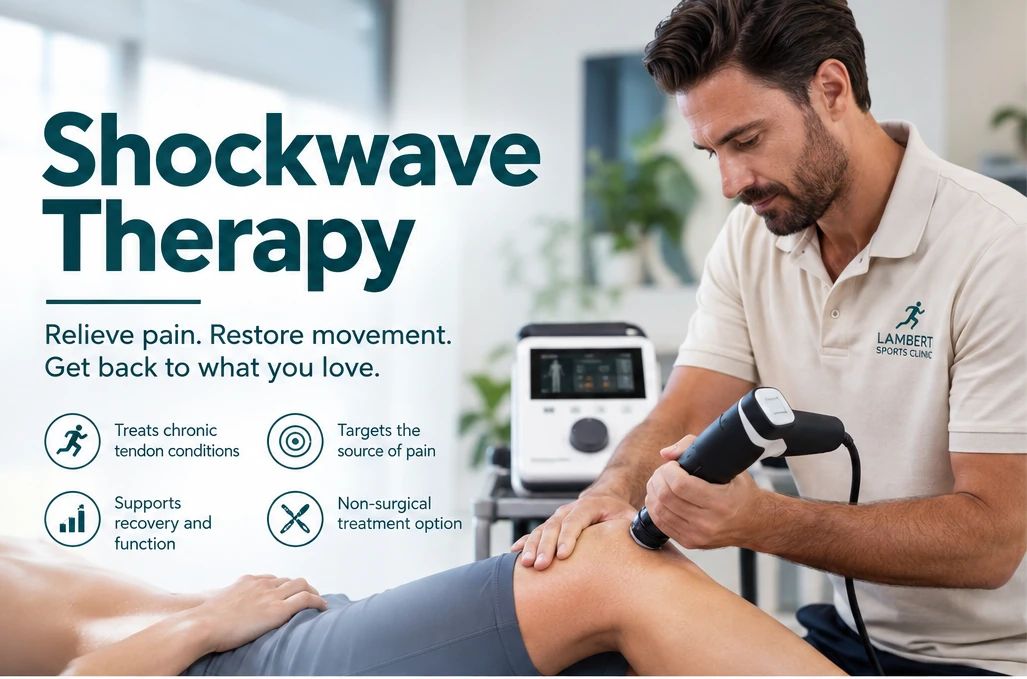
If you have been told that shockwave therapy might help your condition, you may be wondering how it differs from the physiotherapy you may have already tried — or whether you need both. This is a very common question, and the answer is worth understanding clearly before booking any treatment.
The short answer is that shockwave therapy is a treatment modality — one specific tool — whereas physiotherapy is a profession and a comprehensive approach to care that uses many different tools and techniques. At Lambert Sports Clinic, shockwave therapy is always delivered within a physiotherapy appointment, not instead of one.
What Is Physiotherapy?
Physiotherapy is a regulated healthcare profession concerned with movement, function and rehabilitation across the lifespan. Physiotherapists are trained to assess, diagnose and manage a wide range of musculoskeletal, neurological and cardiorespiratory conditions.
In the context of musculoskeletal conditions — such as tendon pain, joint problems, sports injuries and back pain — physiotherapy typically involves:
- Detailed assessment: Taking a thorough history of symptoms, relevant medical background and functional demands.
- Physical examination: Assessing movement, strength, flexibility, load tolerance and other relevant factors.
- Diagnosis and clinical reasoning: Forming a working diagnosis and identifying contributing factors.
- Exercise prescription: Designing a personalised programme of exercises to improve strength, flexibility, load tolerance and function.
- Education and self-management: Helping patients understand their condition and what they can do to support their own recovery.
- Manual therapy: Hands-on techniques including joint mobilisation, manipulation and soft tissue work, where clinically appropriate.
- Physical modalities: Additional treatment tools such as shockwave therapy, taping, electrotherapy or acupuncture, where indicated.
What Is Shockwave Therapy?
Shockwave therapy is a physical treatment modality that uses acoustic pressure waves — pulses of mechanical energy — directed at specific areas of the body. In musculoskeletal physiotherapy, it is used primarily for persistent tendon conditions.
It is one tool within the broader scope of physiotherapy practice — not a profession or a comprehensive treatment approach in itself. It cannot assess your condition, tell you why you are in pain, prescribe exercises, or advise you on activity modifications. All of these require the assessment and clinical reasoning of a qualified physiotherapist.
Key Differences at a Glance
| Physiotherapy | Shockwave Therapy |
|---|---|
| A healthcare profession and comprehensive approach | A specific treatment modality |
| Includes assessment, diagnosis and clinical reasoning | Applied following physiotherapy assessment |
| Uses many tools and techniques | One specific physical tool |
| Addresses the cause as well as the symptom | Directed at a specific symptomatic area |
| Includes exercise prescription and rehabilitation | No exercise or rehabilitation component in itself |
| Appropriate for a broad range of conditions | Indicated for selected persistent tendon conditions |
| Delivered by a qualified physiotherapist | Delivered by a physiotherapist as part of a consultation |
How Do They Complement Each Other?
Shockwave therapy and physiotherapy are not alternatives to each other — they are complementary approaches used together. When shockwave therapy is used without exercise rehabilitation, outcomes are likely to be inferior. The evidence for shockwave therapy in tendinopathy generally positions it as an adjunct to exercise, not a replacement for it.
At Lambert Sports Clinic, this is reflected in how we deliver shockwave therapy:
- Every patient receives a thorough physiotherapy assessment before treatment is recommended.
- Shockwave is only offered when clinically appropriate, following that assessment.
- Patients receive a personalised exercise and rehabilitation programme alongside shockwave treatment.
- Progress is reviewed at follow-up appointments and treatment adjusted accordingly.
Conditions Where Combined Treatment May Be Considered
Shockwave therapy, as part of a physiotherapy programme, may be considered for the following persistent tendon conditions:
- Plantar fasciitis (plantar heel pain)
- Achilles tendinopathy (mid-portion and insertional)
- Lateral elbow tendinopathy (tennis elbow)
- Patellar tendinopathy
- Selected shoulder tendon conditions, including some calcific presentations
In all cases, physiotherapy assessment, exercise prescription and rehabilitation remain essential components of the treatment approach.
The Importance of Rehabilitation
One of the most important messages in modern musculoskeletal physiotherapy is that passive treatments alone — whether that is shockwave, injection, massage or any other modality — are unlikely to produce lasting results without addressing the underlying capacity of the affected structure.
For tendinopathies, this means progressive tendon loading through exercise. The evidence for exercise in tendon conditions is substantially stronger than for any physical modality. Shockwave therapy is not a shortcut around the need for rehabilitation — it is a potential supplement to it.
Pricing at Lambert Sports Clinic
At Lambert Sports Clinic, shockwave therapy is delivered within a physiotherapy appointment. There is no separate charge for the modality when it is provided during your session.
- Initial appointment (physiotherapy + shockwave where appropriate): £90
- Follow-up appointment (30 minutes): £70
Bupa patients are welcome. Please check your individual policy and authorisation requirements before booking.
Choosing the Right Treatment
If you have a persistent musculoskeletal condition and are wondering whether shockwave therapy might help, the right starting point is a physiotherapy assessment. A physiotherapist can accurately assess your condition, explain the treatment options and their evidence base, and help you make an informed decision about whether shockwave therapy is appropriate for your situation.
⚕️ At Lambert Sports Clinic: Shockwave therapy is integrated within our physiotherapy service. You receive both — assessment, exercise rehabilitation and shockwave treatment where appropriate — within a single appointment.
Book a Physiotherapy + Shockwave Assessment in Surbiton
Lambert Sports Clinic · 380 Ewell Road, Surbiton KT6 7BE · Initial £90 · Bupa patients welcome
Book Initial Assessment — £90