Shockwave Therapy for Shin Splints & Medial Tibial Stress Syndrome
Shin splints — medically termed medial tibial stress syndrome (MTSS) — is a common and frustrating condition for runners, athletes, and anyone who has recently increased the amount of impact loading on their legs. It causes pain along the inner border of the shin bone (tibia) during and after exercise, and in persistent cases can significantly limit training and sport.
For cases that do not respond to physiotherapy and load management, shockwave therapy (ESWT) is an emerging treatment option that is gaining an evidence base for MTSS.
What Is Medial Tibial Stress Syndrome?
MTSS involves pain along the inner aspect of the tibia — typically the lower two-thirds of the shin — that occurs during and after exercise and is tender to press along the bone margin. It arises from the cumulative stress placed on the tibia and its surrounding periosteum (the outer bone layer) and connective tissue during impact loading activities such as running and jumping.
MTSS exists on a continuum with tibial stress fractures, which are a more serious presentation. Accurate diagnosis — including ruling out a stress fracture when clinically indicated — is important before commencing any treatment.
Conservative Management
The foundation of MTSS management is load management — a structured reduction in running volume and intensity, combined with cross-training (such as cycling or swimming) to maintain fitness while the tibia adapts. A gradual, structured return-to-running programme follows, with progressive increases in volume. Footwear assessment, biomechanical analysis, and calf and hip strength work are also important components.
The majority of patients with MTSS improve with this approach, though it can take several weeks to months.
When Is Shockwave Considered for Shin Splints?
Shockwave therapy for MTSS is considered when symptoms have persisted for 3 months or more despite consistent conservative management. Clinical studies on shockwave for MTSS have produced encouraging results — several controlled trials have shown that shockwave therapy combined with a structured rehabilitation programme can accelerate return to running compared to rehabilitation alone.
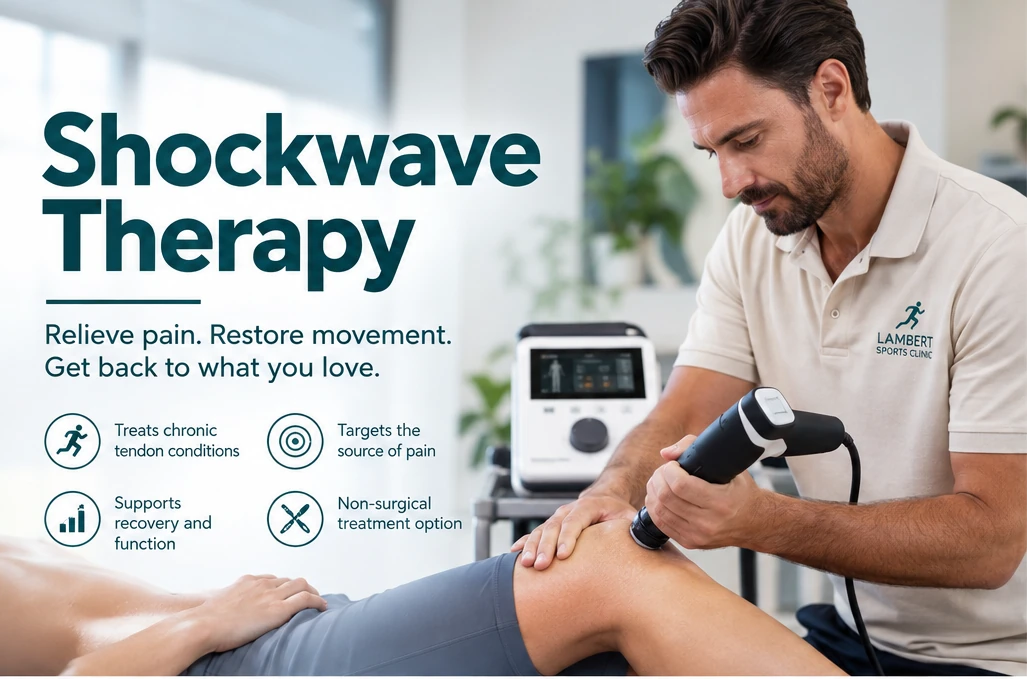
At Lambert Sports Clinic, shockwave for shin splints is delivered along the tender border of the tibia. Typically 3 to 5 sessions spaced one week apart are recommended.
Is It a Stress Fracture or Shin Splints?
This is an important distinction. Both MTSS and tibial stress fracture cause shin pain, but stress fractures require a period of non-weight-bearing rest and are a contraindication to shockwave therapy. Your physiotherapist will assess whether imaging (X-ray or MRI) is appropriate before commencing shockwave. If there is clinical suspicion of a stress fracture, this must be excluded first.
Important: Shockwave therapy is contraindicated over confirmed stress fractures. Assessment to rule out stress fracture is always completed before shockwave for shin pain.
Shin Splints in Runners — Surbiton & Kingston
Surbiton and Kingston have a large and active running community — club runners, Parkrun regulars, and those training for half marathons and marathons. MTSS is a particularly common presentation in runners who have recently started training or increased their mileage. If you are a runner in the area experiencing persistent shin pain, early physiotherapy assessment can help confirm the diagnosis and guide the most appropriate management approach.
Book Shockwave Therapy for Shin Splints
Assessment + first shockwave session from £90 · HCPC physiotherapists · Surbiton, Kingston, New Malden
Book Shockwave — From £90Disclaimer: This article is for general information only and does not constitute medical advice. Suitability for any treatment is determined at individual clinical assessment. Outcomes vary between patients. Lambert Sports Clinic is CQC registered and all physiotherapists are HCPC registered.