Physiotherapy for Tennis Players — Common Injuries & Treatment
Surbiton and Kingston have a vibrant tennis community, with clubs including Surbiton Racket and Fitness Club, various LTA-affiliated clubs, and courts throughout the borough. Tennis is an excellent sport for cardiovascular fitness, coordination and social wellbeing — but its demands on the upper limb, shoulder, spine and lower limb mean that injuries are common at every level of play.
At Lambert Sports Clinic we see tennis players regularly, from club players recovering from first-time injuries to those managing long-term conditions that affect their ability to compete. This guide covers the injuries most commonly seen in tennis players and what physiotherapy offers.
Tennis Elbow (Lateral Epicondylalgia)
Despite its name, tennis elbow affects far more non-tennis players than tennis players — but tennis remains one of its primary causes. Lateral epicondylalgia causes pain on the outside of the elbow, typically aggravated by backhand strokes, gripping the racket, and everyday activities like lifting and twisting.
Management involves load modification, a progressive tendon rehabilitation programme, and — for cases persisting beyond 3 months despite consistent conservative management — shockwave therapy (ESWT), which has a strong evidence base for this condition.
Shoulder Injuries in Tennis Players
The serve and overhead smash are among the most technically and physically demanding actions in sport. They place enormous stress on the rotator cuff, the structures of the shoulder joint, and the surrounding musculature. Common shoulder problems in tennis players include:
- Rotator cuff tendinopathy — particularly supraspinatus and infraspinatus involvement
- Shoulder impingement syndrome — pain with overhead movements
- Internal impingement — a pattern specific to overhead athletes
- Acromioclavicular (AC) joint irritation
- Labral irritation — more common in higher-level players
Physiotherapy for tennis shoulder focuses on restoring rotator cuff strength and balance, improving scapular control, and addressing any technique or training load factors that are contributing to the problem.
Back Pain in Tennis Players
The rotational demands of the serve, combined with rapid directional changes and occasional awkward stretches, make the lumbar spine vulnerable in tennis. Back pain in tennis players may arise from muscle or joint irritation, or in adolescent players, from stress-related changes in the vertebral growth plates (spondylolysis).
Physiotherapy assessment will identify the likely source of back pain and guide a rehabilitation programme, including load management advice specific to your tennis programme.
Knee Pain
Patellar tendinopathy, patellofemoral pain, and knee joint pain related to the repetitive loading of a hard court surface are all seen in tennis players. The court surface matters — hard courts are less forgiving than clay, which absorbs more force. Players who have recently changed surface or increased their court time are at higher risk.
Ankle Sprains and Foot Pain
Lateral ankle sprains are one of the most common acute injuries in tennis, resulting from rapid directional changes. Adequate rehabilitation after a first sprain is essential, as the risk of recurrence is significantly higher in those who have not fully restored proprioception and ankle strength.
Wrist Injuries
Wrist pain in tennis players may arise from the extensors (particularly with backhand technique issues), the distal radioulnar joint, or in younger players, the growth plates. Assessment helps to identify the specific structure involved and guide appropriate management.
What to Expect from Physiotherapy Assessment
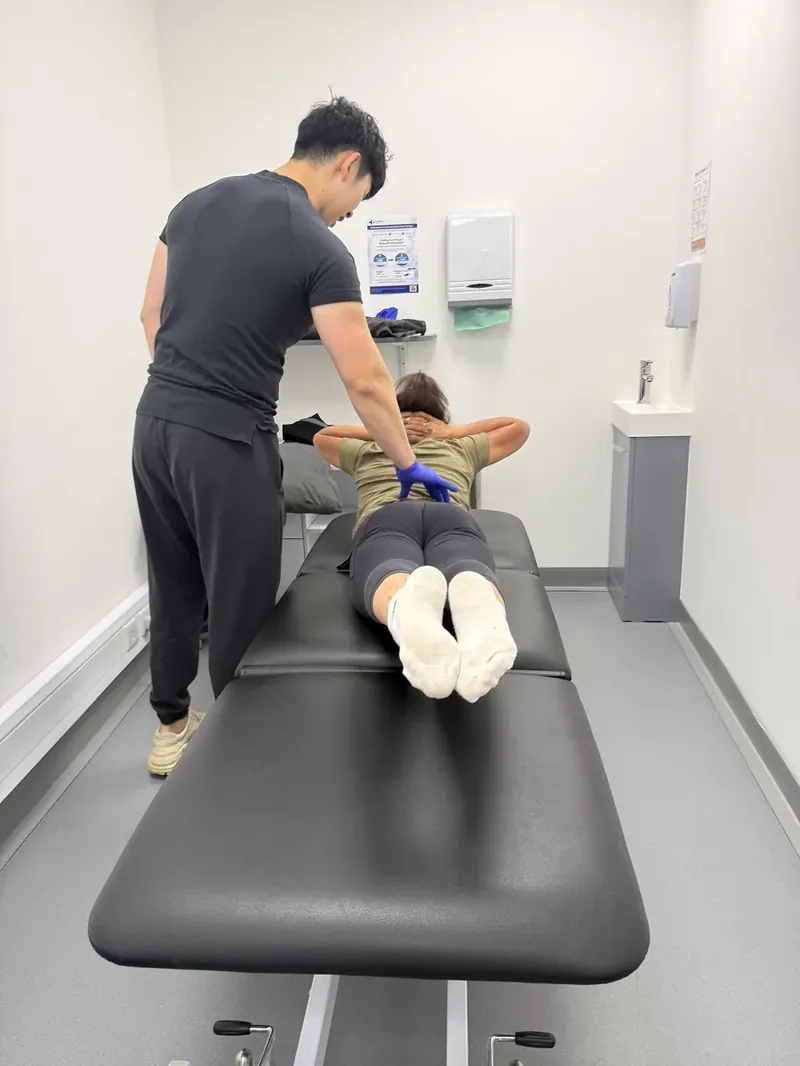
At Lambert Sports Clinic, your assessment will include a detailed history of your tennis activity — how often you play, your level, any recent changes in racket, surface, or training load — alongside a physical examination of the affected area. Where appropriate, we will also consider technique and training factors.
Treatment is tailored to your specific diagnosis and goals, and where possible we aim to keep you active and on court during rehabilitation rather than enforcing unnecessary rest.
Available 6 days a week — including Saturdays. Evening appointments available. Lambert Sports Clinic is CQC registered and all physiotherapists are HCPC registered.
Shockwave Therapy for Tennis Injuries
For tendon conditions that have not responded to physiotherapy alone — including lateral epicondylalgia (tennis elbow), shoulder tendinopathy, and patellar tendinopathy — shockwave therapy (ESWT) may be considered. Shockwave is available at our Surbiton clinic from £90 per session.
Book a Physiotherapy Assessment for Your Tennis Injury
HCPC physiotherapists · Available 6 days a week including Saturdays · Surbiton, Kingston, New Malden
Book Your AssessmentDisclaimer: This article is for general information only and does not constitute medical advice. Suitability for any treatment is determined at individual clinical assessment. Outcomes vary between patients. Lambert Sports Clinic is CQC registered and all physiotherapists are HCPC registered.