Padel Injuries — Physiotherapy & Prevention for Padel Players
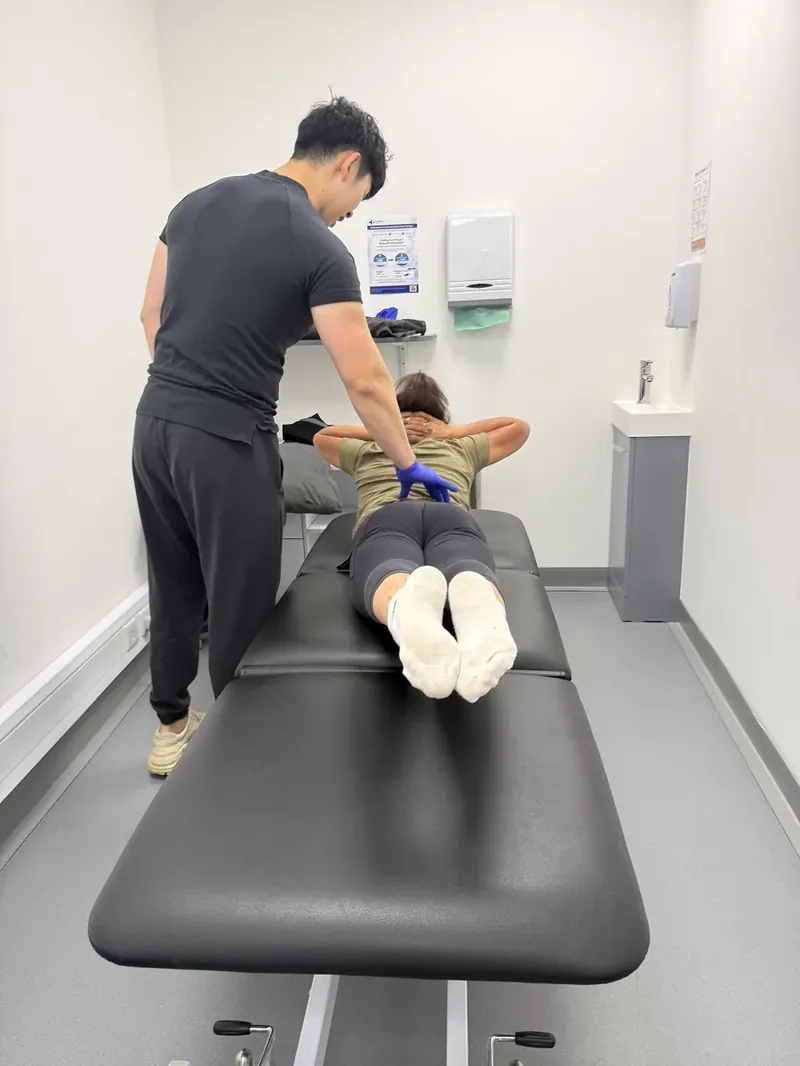
Padel has grown into one of the UK's fastest-growing racket sports, and with that growth has come a new wave of padel-related injuries presenting in physiotherapy clinics. Whether you play socially at weekends or compete regularly at clubs across Surbiton and Kingston, understanding the demands padel places on your body — and how to manage injuries when they arise — is essential for keeping you on the court.
This guide covers the most common padel injuries, how they are assessed, and what physiotherapy and shockwave therapy can offer.
Why Padel Is Hard on the Body
Padel is a high-intensity racket sport played in a glass-walled enclosed court. It combines explosive lateral movements, frequent changes of direction, overhead smashes, and sustained wrist and forearm activity. The enclosed court means balls rarely go out of play — rallies are longer and physical demands are greater than in tennis at a comparable level.
The sport attracts players across a wide age range, many of whom are new to racket sports and have not built up the physical conditioning the sport requires. This combination of high demand and inadequate preparation contributes to a significant injury burden.
Most Common Padel Injuries
Padel Elbow (Lateral Epicondylalgia)
Often called "padel elbow" or "tennis elbow", lateral epicondylalgia is one of the most frequently seen padel injuries. It causes pain on the outside of the elbow, aggravated by gripping, lifting, and racket strokes. The condition involves changes at the extensor tendons that attach to the lateral epicondyle of the humerus. In persistent cases, shockwave therapy may be considered alongside a progressive tendon rehabilitation programme.
Shoulder Pain
Overhead smashes and high volleys place significant demand on the rotator cuff. Rotator cuff tendinopathy, shoulder impingement syndrome, and acromioclavicular joint irritation are all encountered in padel players. Pain is typically felt with overhead movements or at the back of the shoulder during follow-through.
Wrist Injuries
The padel racket is shorter and lighter than a tennis racket, but the wrist still absorbs significant force, particularly during backhand shots and when playing shots off the glass. Wrist extensor tendinopathy, triangular fibrocartilage complex (TFCC) irritation, and De Quervain's tenosynovitis are all seen in regular padel players.
Knee Pain
The lateral lunging movements, rapid deceleration, and court surface of padel create substantial stress on the knee. Patellar tendinopathy (jumper's knee), patellofemoral pain, and medial collateral ligament sprains are among the conditions that may develop.
Ankle Sprains
Sudden changes of direction on a hard court surface make lateral ankle sprains one of the most common acute padel injuries. A proper rehabilitation programme following ankle sprain reduces the risk of recurrence, which is significantly higher in those who do not fully rehabilitate their first sprain.
Calf and Achilles Injuries
Explosive acceleration and push-off from the calf and Achilles tendon complex is a feature of almost every point in padel. Achilles tendinopathy and calf muscle strains are common, particularly in players who have rapidly increased their padel frequency.
Lower Back Pain
Rotational demands during forehand and backhand shots, combined with sustained flexed postures and occasional awkward retrievals off the back glass, can contribute to lumbar pain in padel players.
Assessment at Lambert Sports Clinic
Our physiotherapists assess padel injuries in the context of your playing style, frequency, and technique. Where appropriate, we consider load management strategies that allow you to continue playing while recovering, rather than enforcing a complete rest that often proves counterproductive for tendinopathies and overuse conditions.
New to padel? If you have recently taken up the sport and are experiencing new pain or discomfort, early physiotherapy assessment can prevent minor issues from becoming persistent problems. A short course of treatment and load advice is often all that is needed.
Injury Prevention for Padel Players
Prevention is always preferable to treatment. Key strategies for padel players include adequate warm-up before play, progressive loading when starting or returning to the sport, appropriate racket selection and grip size, strength and conditioning for the shoulder, forearm, and lower limb, and ensuring recovery between sessions is sufficient relative to intensity and frequency.
Sports massage is also valuable for padel players to manage muscle tension in the forearm, shoulder, and lower limb, and to identify areas of developing tightness before they become injuries.
Can Shockwave Therapy Help Padel Injuries?
Shockwave therapy (ESWT) may be considered for padel players with persistent tendon conditions that have not adequately responded to initial physiotherapy management. Lateral epicondylalgia (padel elbow), shoulder tendinopathy, patellar tendinopathy, and Achilles tendinopathy are among the conditions for which shockwave therapy has an evidence base. Suitability is determined at assessment.
Padel Injury? Book an Assessment
HCPC registered physiotherapists · Assessment + treatment plan · Serving Surbiton, Kingston & New Malden
Book a Physiotherapy AssessmentDisclaimer: This article is for general information only and does not constitute medical advice. Suitability for any treatment is determined at individual clinical assessment. Outcomes vary between patients. Lambert Sports Clinic is CQC registered and all physiotherapists are HCPC registered.