Shockwave Therapy for Hip Pain & Greater Trochanteric Pain Syndrome
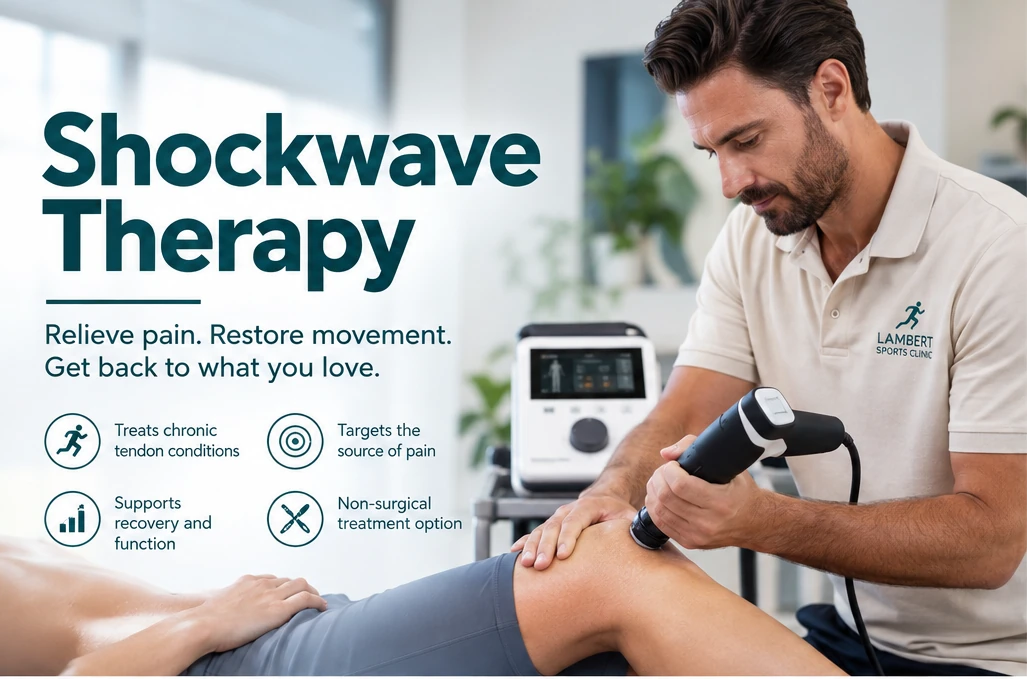
Hip pain on the outer side of the hip — often described as pain when lying on the affected side at night, or discomfort during walking, stairs, or prolonged sitting with crossed legs — is frequently caused by greater trochanteric pain syndrome (GTPS). This condition encompasses gluteal tendinopathy and trochanteric bursitis, and is one of the most common hip complaints seen in physiotherapy practice.
Shockwave therapy (ESWT) has an emerging evidence base for GTPS and is increasingly considered for cases that have not responded adequately to physiotherapy management.
What Is Greater Trochanteric Pain Syndrome?
The greater trochanter is the bony prominence on the outer side of the upper thigh. Several of the gluteal tendons (gluteus medius and gluteus minimus) attach here, and a bursa — a fluid-filled sac — sits between the tendons and the bone. GTPS involves changes in one or more of these structures, producing lateral hip pain that may radiate down the outer thigh.
GTPS is particularly common in middle-aged and older women, though it affects men and younger active people too. Contributing factors include sudden increases in activity, biomechanical issues with hip strength or alignment, and activities that repeatedly load the gluteal tendons, such as running, climbing stairs, or sleeping on the affected side.
Symptoms
- Pain over the outer hip, sometimes radiating down the outer thigh
- Tenderness over the greater trochanter
- Pain worse when lying on the affected side at night
- Discomfort with stairs, walking uphill, and prolonged sitting with legs crossed
- Pain standing on one leg (the affected side)
Conservative Management
Physiotherapy is the first-line treatment for GTPS and involves load management — modifying activities that compress and load the gluteal tendons — alongside progressive gluteal strengthening exercises. Education about positions and activities to avoid in the early stages is also important. Many cases resolve with a well-structured physiotherapy programme.
When Is Shockwave Considered?
For cases of GTPS that have not responded adequately to 3 or more months of well-applied physiotherapy, shockwave therapy may be considered. Clinical trials of shockwave therapy for GTPS have shown promising results, with studies demonstrating improvements in pain and function comparable to or exceeding those of corticosteroid injection, with more durable long-term outcomes in several trials.
Shockwave for hip pain targets the gluteal tendon insertion at the greater trochanter, where the degenerative or reactive tendon changes are located. It is delivered with a gel on the skin and typically involves 3 to 6 weekly sessions.
Lambert Sports Clinic shockwave for hip pain: Initial assessment + first session from £90 · Follow-up sessions from £70 · HCPC registered physiotherapists · Surbiton, Kingston & New Malden
Shockwave vs Corticosteroid Injection for Hip Pain
Corticosteroid (steroid) injections are often offered for GTPS and can provide rapid short-term pain relief. However, research suggests that the benefit of steroid injection tends to diminish over time, and repeated injections carry risks including tendon weakening. Shockwave therapy, while slower in its onset, tends to produce more durable improvements in pain and function, and does not carry the same tendon risk. Your physiotherapist will discuss the most appropriate approach for your specific situation.
Assessment at Lambert Sports Clinic
Before shockwave therapy is commenced, a full physiotherapy assessment confirms the diagnosis of GTPS and rules out other causes of hip pain (including lumbar spine referral, hip joint pathology, and nerve-related pain). A clear treatment plan is agreed, including the role of shockwave alongside ongoing exercise rehabilitation.
Book Shockwave Therapy for Hip Pain in Surbiton
Assessment + first shockwave session from £90 · HCPC physiotherapists · Surbiton, Kingston, New Malden
Book Shockwave — From £90Disclaimer: This article is for general information only and does not constitute medical advice. Suitability for any treatment is determined at individual clinical assessment. Outcomes vary between patients. Lambert Sports Clinic is CQC registered and all physiotherapists are HCPC registered.