Squash Injuries — Physiotherapy for Knee, Ankle, Back & Shoulder Pain
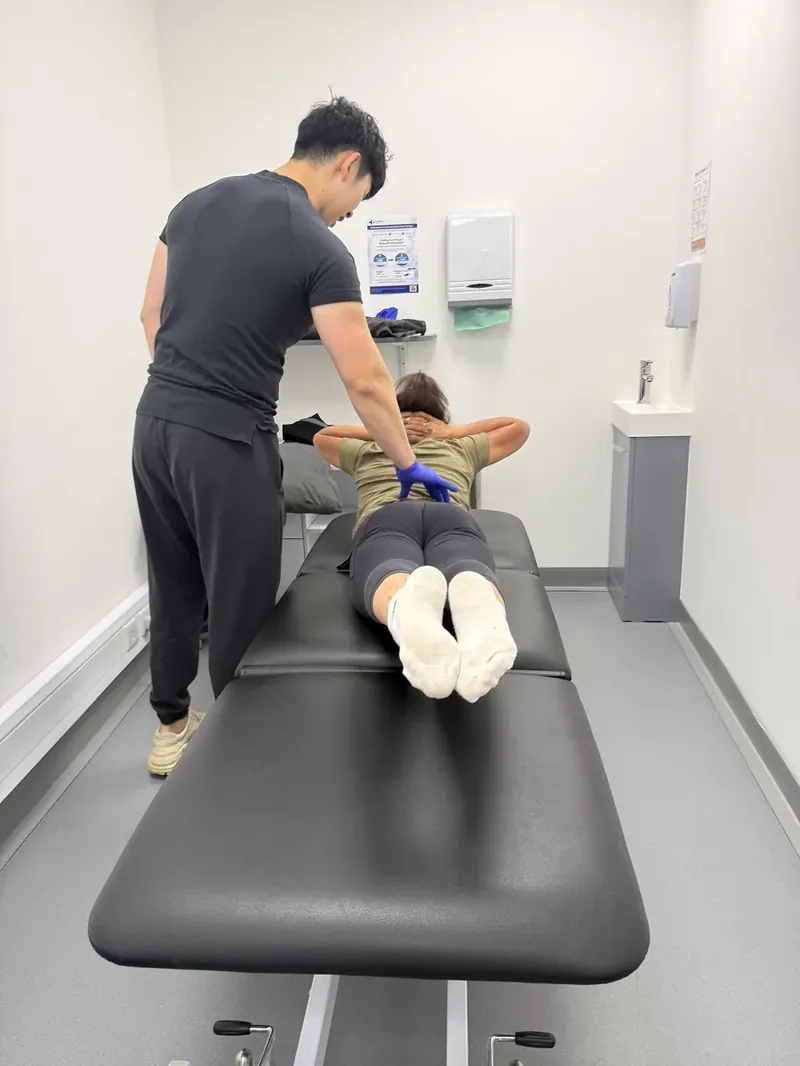
Squash is among the most physically demanding of all racket sports. High-intensity rallies, explosive lunges in multiple directions, rapid changes of speed and direction, and the confined space of the court all combine to create a significant risk of both acute and overuse injuries. If you play squash in or around Surbiton and Kingston and have been sidelined by injury, understanding what you are dealing with is essential for getting back on court efficiently.
What Makes Squash Different
Compared to tennis and padel, squash involves: a much faster ball with less reaction time, deep lunges that require extreme knee flexion and ankle loading, confined court space requiring rapid deceleration, and a similar symmetry-breaking pattern of hitting from one side, creating muscle imbalances over time. These factors combine to create a high injury burden, particularly in the lower limb.
Knee Injuries in Squash Players
Patellar Tendinopathy (Jumper's Knee)
The deep, lunging movements of squash place enormous stress on the patellar tendon. Patellar tendinopathy — sometimes called jumper's knee — causes pain at the bottom of the kneecap, particularly with loading activities such as lunging, stairs, and rising from a chair. It is a load-related tendon condition that responds well to a progressive loading programme. In chronic cases, shockwave therapy may be considered.
Patellofemoral Pain
Pain around or behind the kneecap that worsens with sustained squatting, lunging, or going up and down stairs. This is particularly common in squash players who have recently increased their court time or changed their court surface, and responds well to physiotherapy addressing quadriceps strength, hip mechanics and footwear.
Medial Collateral Ligament (MCL) Sprain
Acute valgus stress from a lunging misstep can strain the medial collateral ligament, causing pain on the inner side of the knee. Grade 1 and 2 sprains are managed conservatively with physiotherapy; grade 3 tears require more comprehensive management.
Ankle Injuries
Lateral ankle sprains are the most common acute injury in squash, arising from the rapid directional changes and occasional loss of footing on court. Research consistently shows that inadequate rehabilitation of a first ankle sprain dramatically increases the risk of recurrent sprains — often the second or third sprain is worse than the first. A full rehabilitation programme including proprioceptive training and ankle strengthening is essential.
Back Pain in Squash Players
The rotational demands of squash strokes, sustained forward-lean posture during rallies, and the occasional awkward retrieval all place stress on the lumbar spine. Acute muscle strains, facet joint irritation, and in younger players, stress-related vertebral changes, are all seen in squash players. Physiotherapy assessment helps to identify the cause and guide a sport-specific rehabilitation programme.
Shoulder and Elbow Injuries
Lateral epicondylalgia (squash elbow, equivalent to tennis elbow) occurs in squash players, particularly those with a backhand technique that places high wrist extensor loading. Shoulder rotator cuff tendinopathy can also develop with high training volumes. Both conditions respond to physiotherapy, and shockwave therapy may be appropriate for chronic cases.
Calf Strains and Achilles Tendinopathy
The explosive push-off required for squash court movement places heavy demand on the calf-Achilles complex. Calf muscle tears (particularly medial gastrocnemius) are common in squash players over 35, and Achilles tendinopathy can develop with sustained high playing loads. Both require careful management to achieve full recovery and reduce recurrence risk.
Returning to Squash After Injury
One of the most important aspects of physiotherapy for squash injuries is a structured return-to-court plan. Returning to squash before adequate recovery — particularly for ankle sprains, knee tendinopathies, and muscle injuries — significantly increases the risk of re-injury. Your physiotherapist will guide you through a phased return, beginning with court movement without hitting, progressing to light hitting, and finally returning to full competitive play.
Available 6 days a week including Saturdays. Lambert Sports Clinic is CQC registered. All physiotherapists are HCPC registered.
Book a Squash Injury Assessment
HCPC physiotherapists · 6 days a week · Surbiton, Kingston & New Malden
Book Your AssessmentDisclaimer: This article is for general information only and does not constitute medical advice. Suitability for any treatment is determined at individual clinical assessment. Outcomes vary between patients. Lambert Sports Clinic is CQC registered and all physiotherapists are HCPC registered.